
Battles, Blizzards & Beyond
Tales of Toyota’s World-Renowned Pickup Truck
An all-original account of the Toyota Hilux, the world’s toughest pickup truck and the extreme environments where it thrives.
-
At first glance, the Toyota Hilux is an unassuming work truck, common in most parts of the world. And yet, through Toyota’s acclaimed design and engineering, the Hilux has gained a reputation as an unbeatable vehicle for extreme environments. The Toyota Hilux has been adapted for conditions far beyond its intended use. It transcends its roots as a pickup truck. There are more capable light duty military vehicles deployed by armed forces. Tractors and snow machines specifically engineered for ice and snow traverse the Antarctic plains. The Toyota Land Cruiser, Jeep Wrangler, and Land Rover Defender are 4x4s designed for…
-
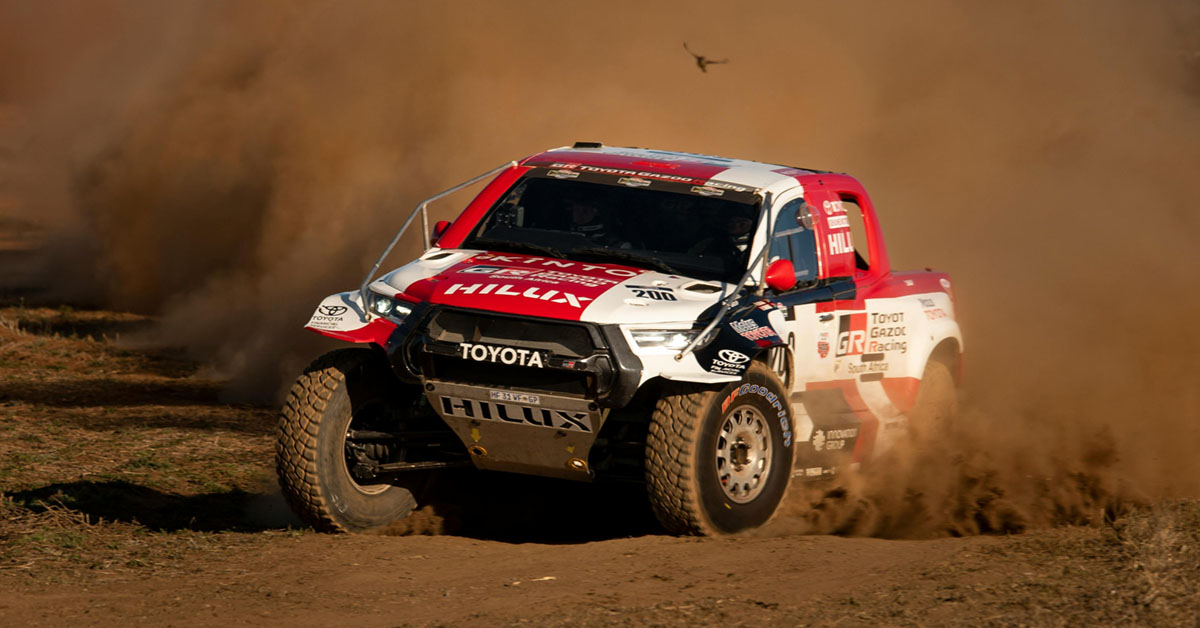 “Off-Road Truck on Dirt Road” by Steward Masweneng was photographed on August 20, 2022 and is licensed under Pexels (source)
Rally Raids: Extreme Off-Road Racing
Imagine a 3,100 mile / 5,000 kilometer overland route through unforgiving, trackless terrain. Now imagine driving that route at breakneck speed. Off-road rally racers endure days of brutal driving for competitive glory. Not surprisingly, the Toyota Hilux has a history of cross country rallying success. Competitive overlanders, amateurs and professionals alike, can push their Toyota Hilux to the limit in grueling rally raids. The Toyota Hilux’s unbeatable reputation has been validated many times over with electrifying rally raid wins. The Toyota Hilux is ubiquitous at the broadly popular World Rally-Raid Championship (W2RC) series, an annual competition of five rally raid…
-
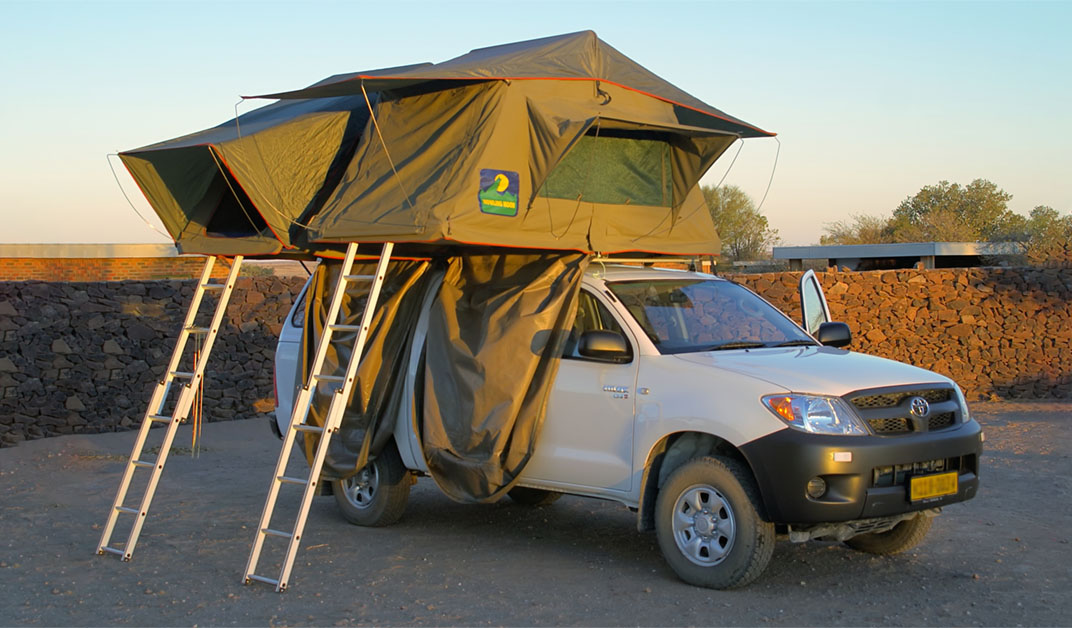 “Toyota Hilux D-4D with Roof Tents” by Hans Hillewaert was photographed on June 12, 2007 and is licensed under CC BY-SA 3.0 DEED – Attribution-ShareAlike 3.0 Unported (source)
Beyond Boundaries: Overlanding in a Hilux
A properly equipped Toyota Hilux can take you where few other vehicles can. The 4×4 capabilities of the Toyota Hilux makes it ideal for exploring the world off-road. Some Hilux adventurers take off-roading to the extreme, traveling for weeks, months, even years across borders and into unexplored realms, roads optional. Overlanding – self-reliant adventure travel to remote and often undeveloped destinations – is the embodiment of this spirit. The reliable Toyota Hilux, outfitted with extra fuel, supplies, and navigational aids, opens undiscovered lands to adventuresome drivers. For overlanders, life is too short to be tied to the demands and obligations…
-
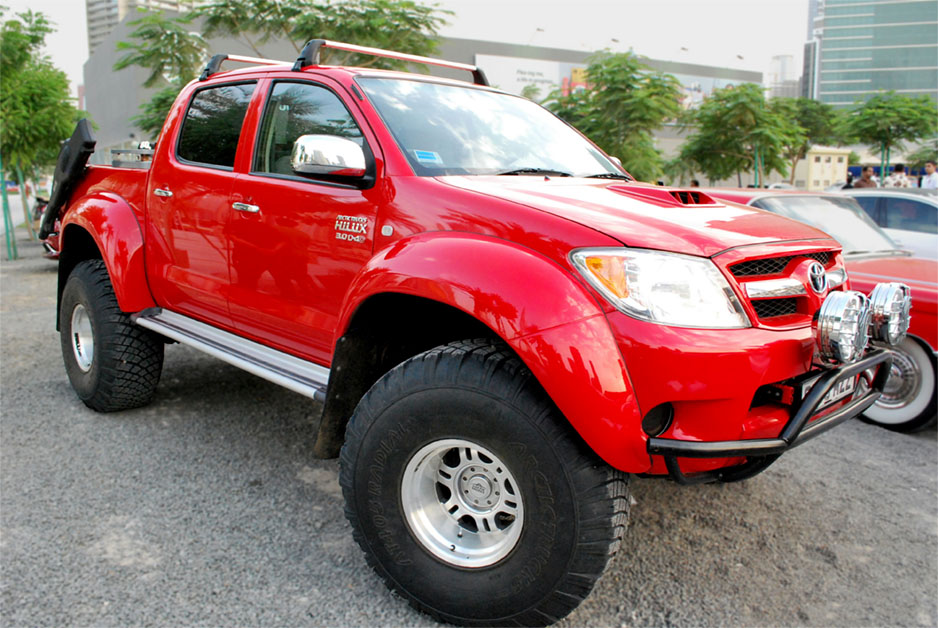 “Arctic Trucks AT38” by Kurush Pawar was photographed on June 15, 2012 and is licensed under CC BY-SA 2.0 DEED – Attribution-ShareAlike 2.0 Generic (source)
Hilux, Today’s Antarctic Transport
Along with Hägglunds (Swedish dual-cab tracked snow vehicles), Sno-Cats, Pisten Bully snow groomers, modified Caterpillar Challenger agricultural tractors, and snow machines (aka snowmobiles, aka skidoos), the Toyota Hilux reliably ferries supplies, transports researchers and support teams, and performs reconnaissance duties. The Hilux provides an uncommonly comfortable ride for the conditions. Toyota Hiluxes travel modest distances in Antarctica but are kept running for extended periods – sometimes for weeks – to prevent freezing. Their reliability in Antarctica is legendary. Eric Mulder, blogging from the Australian Antarctic Program’s Mawson base, notes that their Hiluxes were “almost unbreakable” and could turn over even…
-
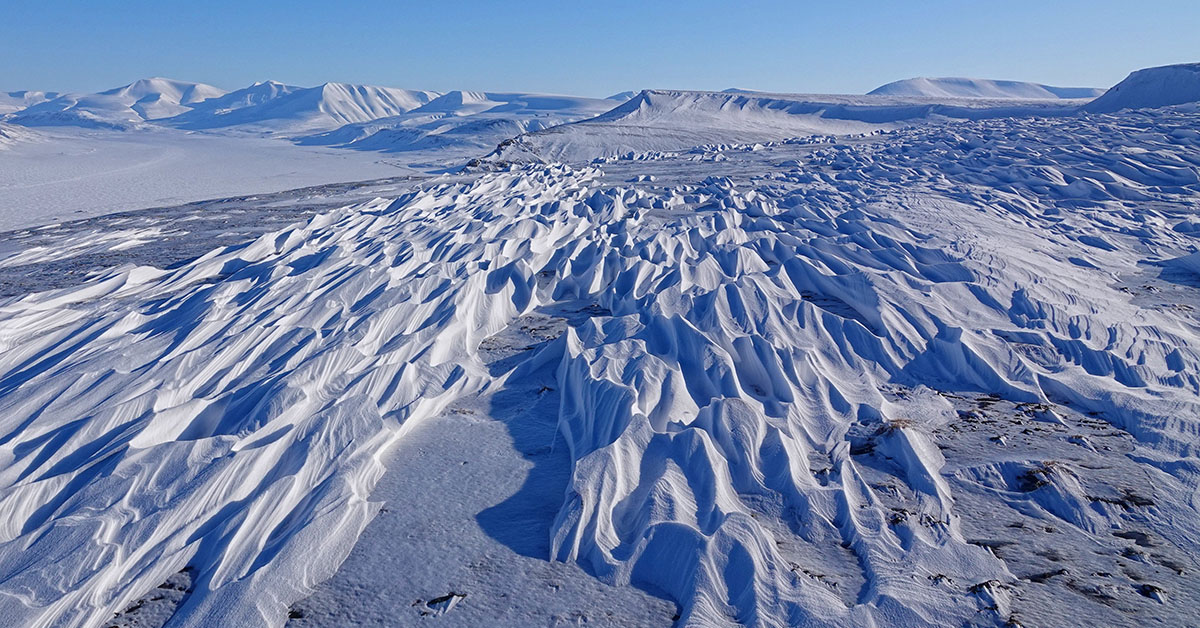 “Svalbard Sastrugi Snow” by Bjørn Christian Tørrissen was photographed on September 16, 2023 and is licensed under CC BY-SA 4.0 DEED – Attribution-ShareAlike 4.0 International. Photographed on Spitsbergen island, Norway (source).
Polar Workhorse: Hilux in Antarctica
Few places are as challenging to traverse as Antarctica, Earth’s most inhospitable continent. The vast, windswept landscape varies from hard ice to deep snow, with just a few rocky beaches. Fields of jagged ice – starmukha – hide gaping crevasses, some over a hundred feet deep and wide enough to swallow a vehicle. Powdery snow traps vehicles and diminishes mobility. Towering sastrugis, jagged, wind-eroded snow formations, block passage, as do massive walls of ice formed by pressure ridges. Violent blizzards can trap an exploration party for weeks. Antarctica is a bizarre, disorienting land. At the pole, a 6-month day (October-March,…
-
 “SDF Technicals in Northern Raqqa Countryside” by VOA News was photographed on December 12, 2016 and is licensed under CC0 1.0 DEED – CC0 1.0 Universal. Not edited by the author. SDF technicals during the Northern Raqqa offensive (source).
Operation Inherent Resolve: ISIS v SDF
Perhaps no other group is as closely associated with Hilux technicals as the Islamic State of Iraq and Syria (ISIS), also known worldwide as ISIL (Islamic State in Iraq and the Levant), and commonly called Daesh – a transliteration of the “ISIS” acronym in Arabic, conjugated to mean “bigot” – across the Middle East. Convoys of hundreds of Hilux technicals overflowing with jihadists are indelible images from ISIS’ shocking takeover of major Iraqi cities in June 2014: Mosul (population about 1.3 million), Tikrit (population about 230,000), Fallujah (population about 300,000). It was ISIS’ association with the Toyota Hilux that made…
-
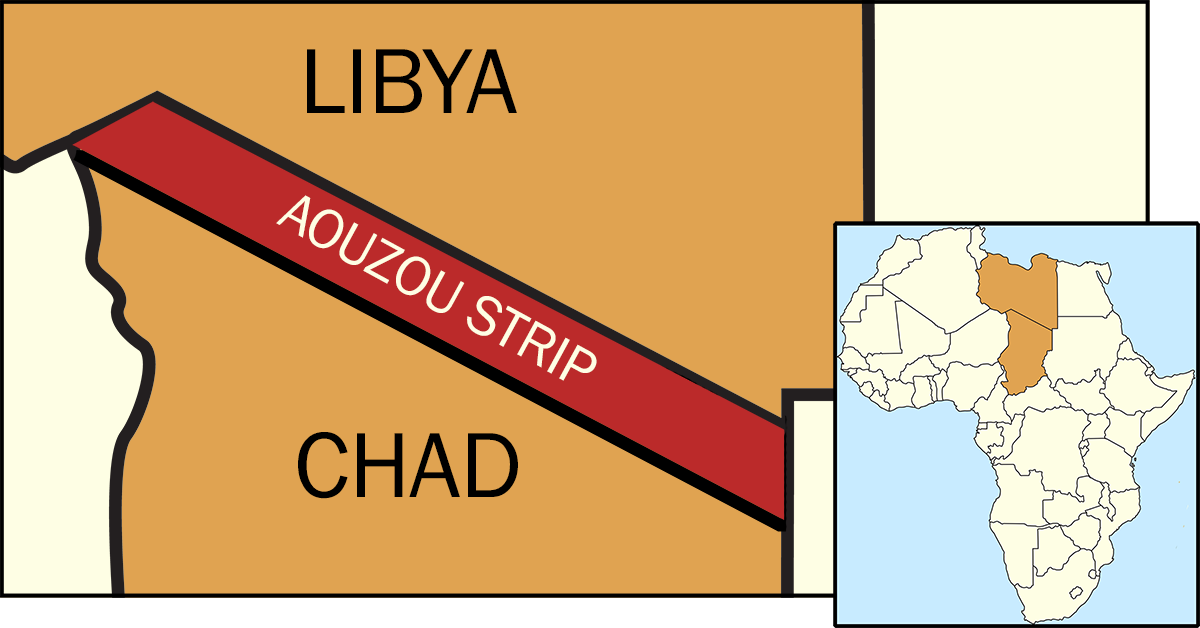 The Aouzou Strip, site of the Great Toyota War
The Chadian – Libyan War, aka The Great Toyota War
The Chadian-Libyan war was waged from 1978 to 1987, but a decisive battle at the end of the conflict earned it the name “The Great Toyota War.” The name was first coined in a 1984 Time magazine article reporting on Chad’s civil war and was the first mainstream account of the Hilux technical phenomenon. The Chadian-Libyan war wasn’t the first to deploy civilian vehicles in combat but is nevertheless remembered for its innovative and brutally effective asymmetrical tactics. Chad scored a surprise victory by mastering a new kind of mechanized warfare, one that pits cheap, rugged civilian vehicles – the…
-
 “SDF Technicals in Northern Raqqa Countryside” by VOA News was photographed on December 12, 2016 and is licensed under CC0 1.0 DEED – CC0 1.0 Universal. Not edited by the author. SDF technicals during the Northern Raqqa offensive (source).
The Hilux as a Non-Standard Tactical Vehicle, or “Technical”
The most notorious adaptation of the Toyota Hilux is on the battlefield. The Hilux has been conscripted as an unintended warrior for decades. Many in the US were first introduced to the Toyota Hilux from news coverage of wars in Afghanistan, Syria, and Iraq, where columns of Hilux vehicles paraded through captured cities (packed into the bed and cab, up to twenty militants can be transported in a Toyota Hilux). As described by the New York Times, “for ordinary fighters, men with long beards and longer barrels on their ubiquitous Kalashnikovs, the vehicle of choice is the Toyota Hilux, a…
-
 “Freestyling” by R. Walker was photographed on August 31, 2008 and is licensed under CC BY 2.0 DEED – Attribution 2.0 Generic. Color enhanced by the author. Taken in Mountain Ash, New South Wales, Australia (source)
What’s a Hilux?
Most everywhere in the world except the US, the Toyota Hilux is prized as a tough, versatile, and reliable four-wheel drive midsize pickup truck. The Hilux is a practical choice for both commercial and personal use, from construction sites in bustling cities to unpaved roads in rural landscapes. Confident off-road as well as on city streets, this popular work truck is found in a myriad of environments for which it was never intended. “Hilux” is a portmanteau of “high” and “luxury,” but there’s nothing luxurious about the Hilux. Reviewers often note its utilitarian, spartan interior and stiff handling. It’s not…